
Oil Booms, Silt Curtains and Floating Barriers
Oil Booms, Silt Curtains and Floating Barriers
MARINE APPLICATIONS
Plan sediment control for UAE dredging and reclamation. Review silt curtains, water depths, currents, moorings and 7 practical project checks before enquiry.
Sediment control begins with the work method, water conditions and environmental requirements. A correctly configured silt curtain can help limit dispersion around a designated work area, supported by inspection and appropriate monitoring.
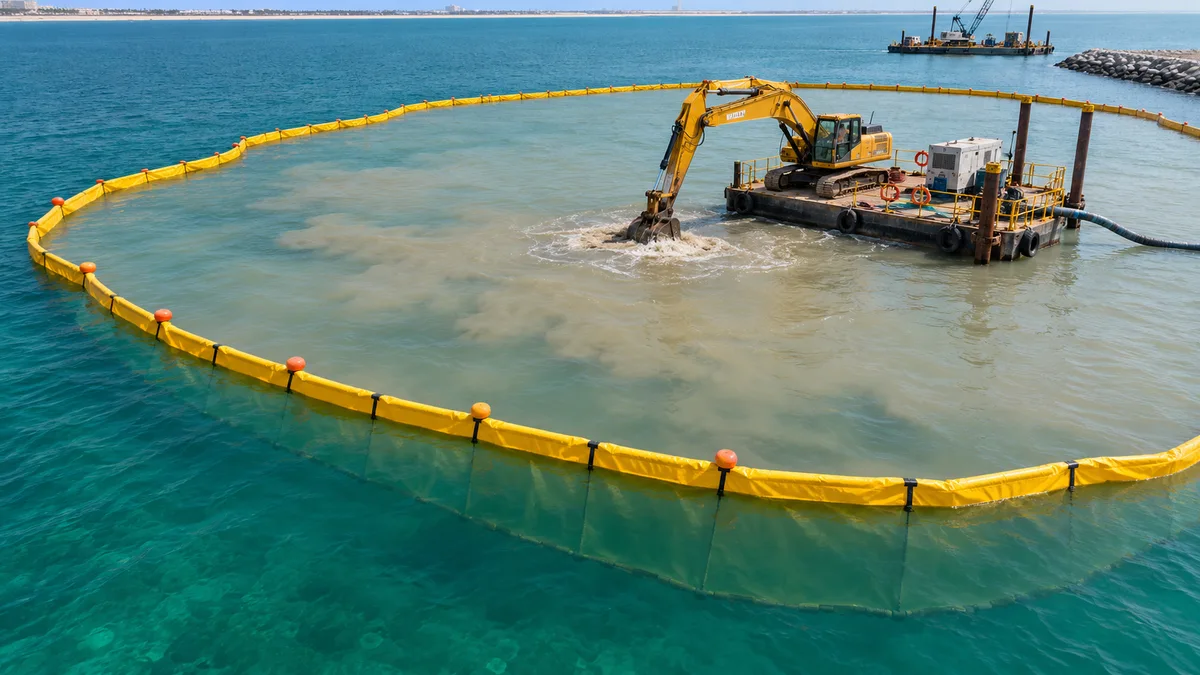
Dredging and reclamation: illustrative product or service image. Final appearance and specification vary by model and project.
On this page
Toggle
SEDIMENT CONTROL
Submerged curtains that help limit the spread of suspended sediment.
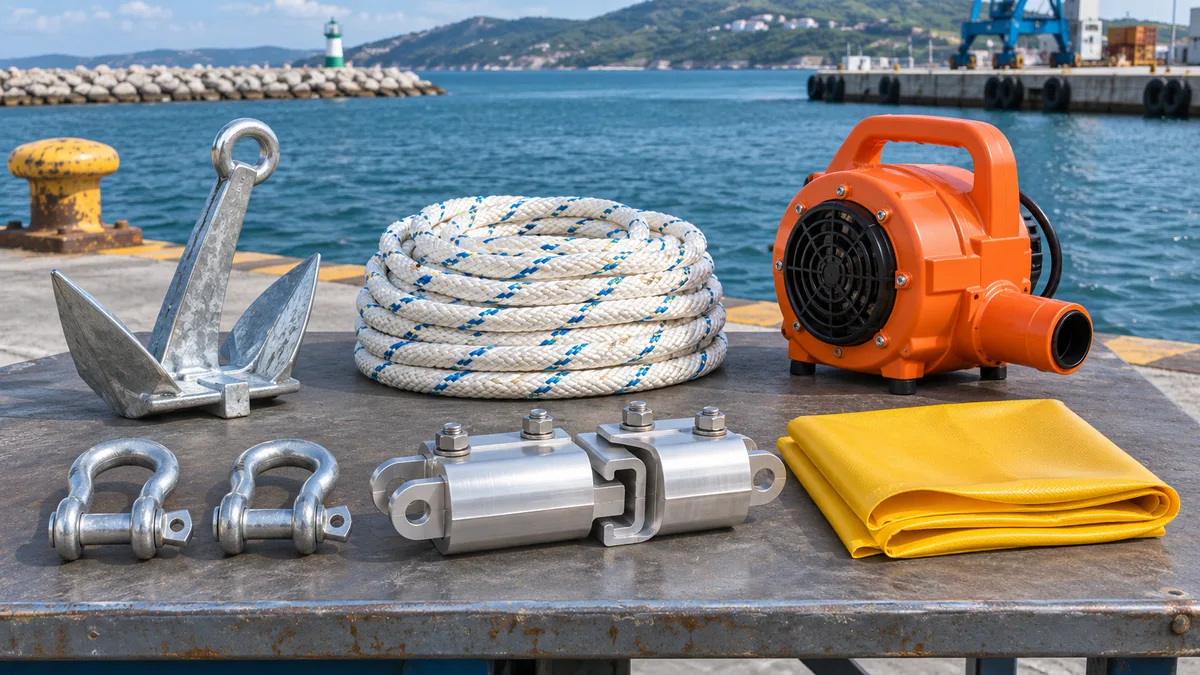
ACCESSORIES
Connectors, moorings and handling equipment for a complete system.
Use these seven checks when discussing dredging and reclamation for a UAE project. The aim is to describe the actual requirements, compare equivalent scope and identify the information that still needs confirmation. Keep the project drawing, proposed dates and relevant technical documents available for the discussion.
For dredging and reclamation, describe the excavation, fill placement or discharge method. Identify where suspended material is generated and how the work sequence may change.
Provide bathymetry, working water levels and tidal range. Curtain depth and bottom clearance should follow the selected design rather than an assumption of continuous seabed contact.
Record current direction, speed, waves, wakes and nearby intakes. These conditions influence feasibility, the effective skirt depth and the forces on moorings.
Show the work footprint, shore interfaces, anchor positions and openings needed for vessels. A practical drawing helps coordinate containment with ongoing construction.
Compare flotation, fabric permeability, reinforcement, ballast and connections. Use the actual model details and explain how they relate to the intended sediment-control objective.
Identify project monitoring requirements and the process for responding to displacement or an escaping plume. Define who checks the system as the work advances.
Plan retrieval around retained sediment and the completion programme. Relocation and demobilisation can release suspended material and need an agreed handling method.
For dredging and reclamation, the final decision should follow the exact equipment specification and project conditions. Where a dimension, rating or service responsibility is not confirmed, identify it explicitly in the enquiry. Review the barrier selection guide and prepare a project enquiry to continue.
For a UAE project enquiry, call +971 52 527 0612, use WhatsApp or email info@marinebarriersuae.com. Include the application, location, required dimensions and delivery programme. Model suitability, scope and availability are confirmed for the project.
For background on sediment-control curtains, see Fisheries and Oceans Canada’s site-isolation guidance.
COMPARE THE COMPLETE SYSTEM
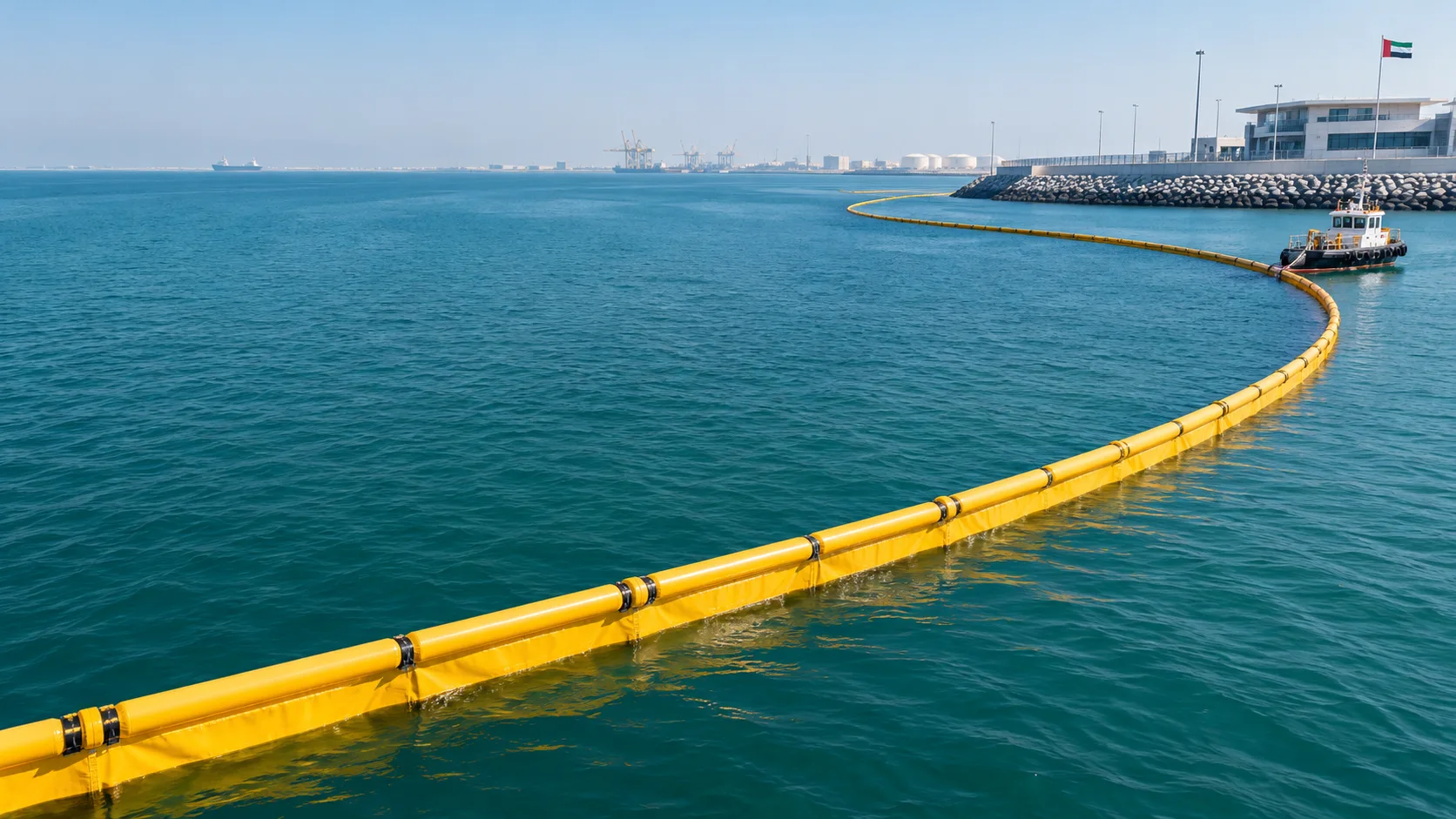
Plan floating oil, debris and boundary-control systems for active waterfront operations.
START WITH YOUR PROJECT
Tell us the application, location, water conditions and required length.
Oil containment, sediment control, debris management and clear water boundaries.
Project enquiries across the United Arab Emirates.
Dubai · Abu Dhabi · Sharjah · Ajman · Umm Al Quwain · Ras Al Khaimah · Fujairah
© 2026 Marine Barriers UAE. Product and service images are AI-generated illustrations, not photographs of actual company projects or personnel. Specifications and service availability are confirmed for each project.